An October sales increase is easier to interpret when you compare it with both the previous month and the same period last year. The first comparison shows recent momentum; the second puts that momentum in a seasonal context. Then check net profit alongside sales. A bigger top line can still leave you with less profit than you earned at the same point last year.
For an Amazon seller deciding what deserves more attention during Q4, the useful question is how much of the extra revenue is becoming profit. sellerboard’s year-over-year comparison helps you make that check in Charts, P&L and Trends.
What does a comparison with last month leave out?
Suppose sales for the first ten days of October are 30% higher than for the first ten days of September. That is a real increase between those two periods. But if demand also rises every autumn, the percentage alone cannot tell you whether your business is performing better than it usually does at this time of year.
A comparison with the same ten days last year adds another reference point. It can show whether sales are above or below last October’s level, while the month-to-month view shows what changed most recently. Both views are useful when you keep those different questions in mind.
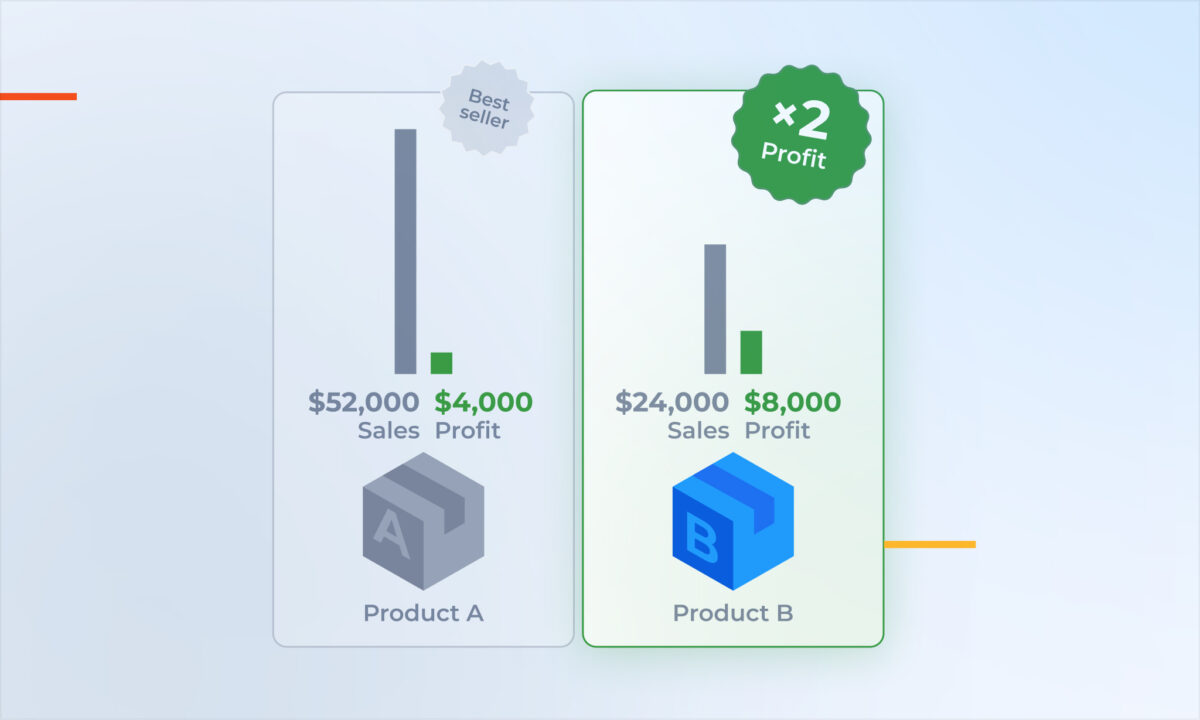
Can sales grow while the business earns less?
Yes. Consider this illustrative example for one store, using the same currency and a consistent basis for costs. These are made-up figures to show the arithmetic, not a sellerboard customer result.
| Period | Sales | Net profit | Net margin |
|---|---|---|---|
| 1–10 September this year | $30,000 | $4,800 | 16% |
| 1–10 October last year | $36,000 | $5,400 | 15% |
| 1–10 October this year | $39,000 | $4,680 | 12% |
The month-to-month sales headline is +30%: ($39,000 − $30,000) ÷ $30,000. Against the same period last year, sales are up 8.3%: ($39,000 − $36,000) ÷ $36,000. Yet net profit is down 13.3% year over year: ($4,680 − $5,400) ÷ $5,400.
The store is selling more, but earning $720 less than last October. Its net margin has fallen from 15% to 12%, a drop of 3 percentage points. That deserves a closer look before the 30% sales increase becomes the reason for a higher spending target.
The table does not tell us why profit fell. Advertising, purchase costs, fees, refunds, prices or the products being sold could have changed. The next step is to inspect the cost and product detail for the same periods, then test the explanation against what actually happened. A year-over-year percentage cannot make that diagnosis for you.
How do you check this in sellerboard?
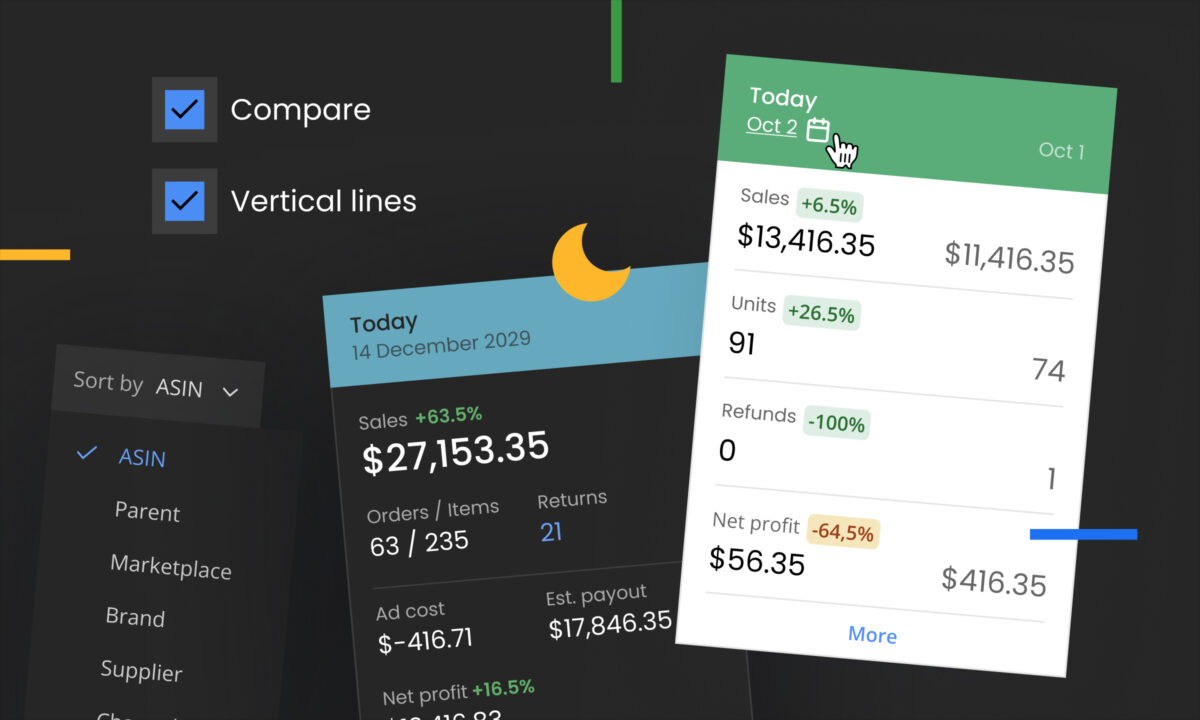
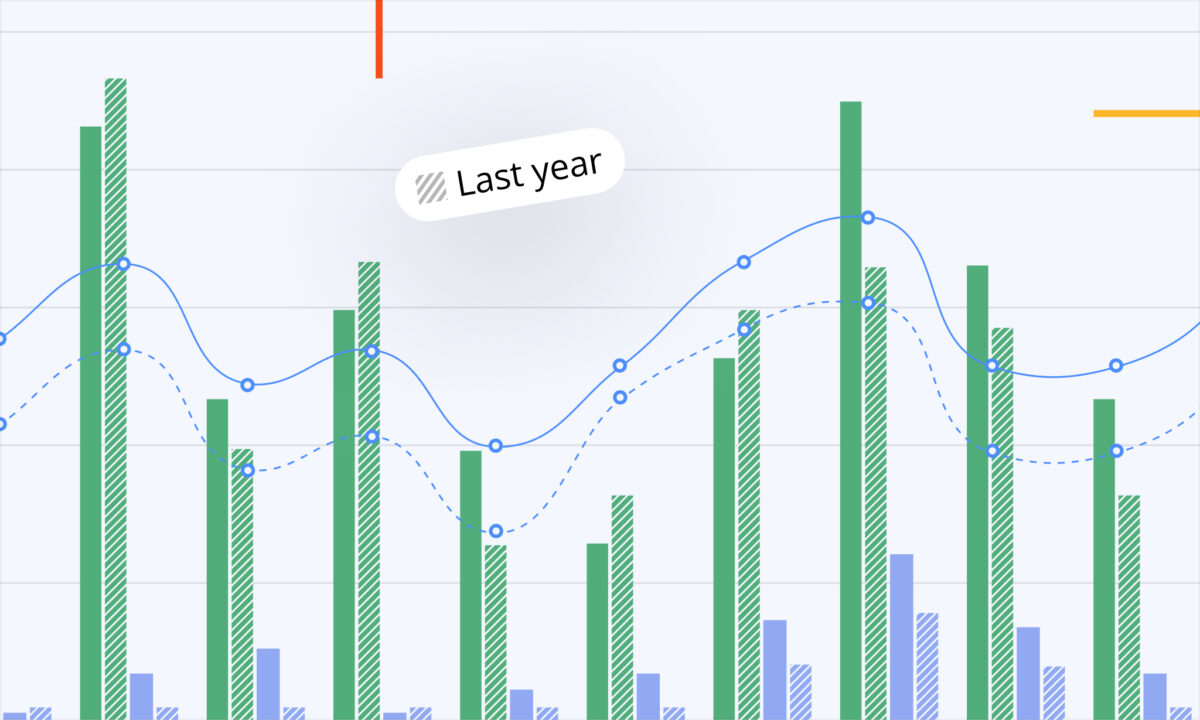
Open Charts, P&L or Trends and choose the period you want to review. In the page’s filter settings, select “Compare Year over Year”. Comparison values then appear throughout that view. Hover over a chart or table entry to see the current value, the corresponding value for the same period last year, and the percentage difference.
Start with sales and net profit for the same scope. Charts can help you see whether the difference is concentrated in a few days. Use the P&L comparison to inspect the financial picture, or Trends to review the comparison in that view. Keep the period and filters consistent as you move between them, so you do not accidentally compare one marketplace’s sales with the whole account’s profit.
In the example above, the first finding would be straightforward: sales are up against last year and profit is down. That is the finding to carry into the detailed review. Work out which changes account for the $720 difference before choosing a response.
What makes a year-over-year comparison fair?
First, compare like-for-like periods. On 13 October, a full September total and October’s partial total answer different questions. For a month-to-date check, use the same elapsed portion of each comparison period. Be explicit about the dates, especially when sharing a screenshot with someone else.
Next, check what the dates contain. A promotion may have moved, a product may have been out of stock last year, or a different mix of weekdays may affect the result. sellerboard’s year-over-year feature compares corresponding calendar periods. If a Prime promotion or Black Friday falls on different dates in the two years, review those event windows separately before drawing a conclusion.
The business itself may also have changed. New products and marketplaces can increase the account total even if established products have weakened. It can be useful to review the whole business first and then a consistent group of products or marketplaces that existed in both periods. Treat that as a separate comparison and label its scope.
Finally, check the data behind profit. Missing purchase costs or expenses, late refunds and differences in how costs were recorded can make two profit figures look more comparable than they are. Last year’s data also needs to be available for the period you choose. Where the history is incomplete, say so rather than treating an empty comparison as zero performance.
What should you do with the result?
Use the comparison to narrow the next question. If sales and profit are both ahead of last year, look at whether the improvement is broad or concentrated in a few products or days. If sales are ahead but profit is behind, review the costs and product results that could explain the gap. If the comparison is dominated by a promotion or last year’s stockout, establish a more useful reference period before changing a target.
A positive result is evidence about the period you measured. It is not a forecast for the rest of Q4, and it does not establish that an advertising or pricing change caused the improvement. Keep a short note of what you found, what explanation you checked, and what you will review next. That makes the next comparison useful instead of turning each new percentage into a fresh reaction.
Common mistakes
- Comparing a partial month with a complete month without stating the difference.
- Celebrating sales growth without checking net profit over the same period.
- Calling a margin change from 15% to 12% a 3% decline. It is a decline of 3 percentage points.
- Assuming the same calendar dates contain the same promotions, stock availability or catalogue.
- Treating a comparison as proof of what caused a change, or as a prediction of future results.
FAQ
Should I stop comparing with the previous month?
No. The previous period shows recent momentum, while the same period last year adds a seasonal reference. Read both and check the events or changes that could make either baseline misleading.
Where is the year-over-year option in sellerboard?
Open the filter settings on Charts, P&L or Trends and select “Compare Year over Year”. Hover over a chart or table entry for the current value, corresponding prior-year value and percentage difference.
What if I did not sell the product last year?
There is no established prior-year performance for that product to compare with. Review its available history separately, and keep its contribution visible when interpreting account-level growth.
Does a better year-over-year result mean I should increase my ad budget?
It gives you a reason to investigate where performance improved. A budget decision still needs campaign-level economics, stock availability and an understanding of what changed; account-level growth alone does not provide those answers.
Before you act on a Q4 growth headline, check the dates, the comparison baseline and the profit behind the sales. A useful comparison should leave you with a clearer next question and enough context to investigate it.