Three new features are live in sellerboard. Each one closes a gap that used to force you out of the dashboard and into a spreadsheet, an ad console, or a second report: you can now see what your off-Amazon marketing actually earns on Amazon, keep your product costs in sync with your own source of truth automatically, and watch Real ACOS move over time instead of checking it one period at a time.
Here’s what each one does and how to start using it.
Amazon Attribution: connect your external marketing to Amazon sales
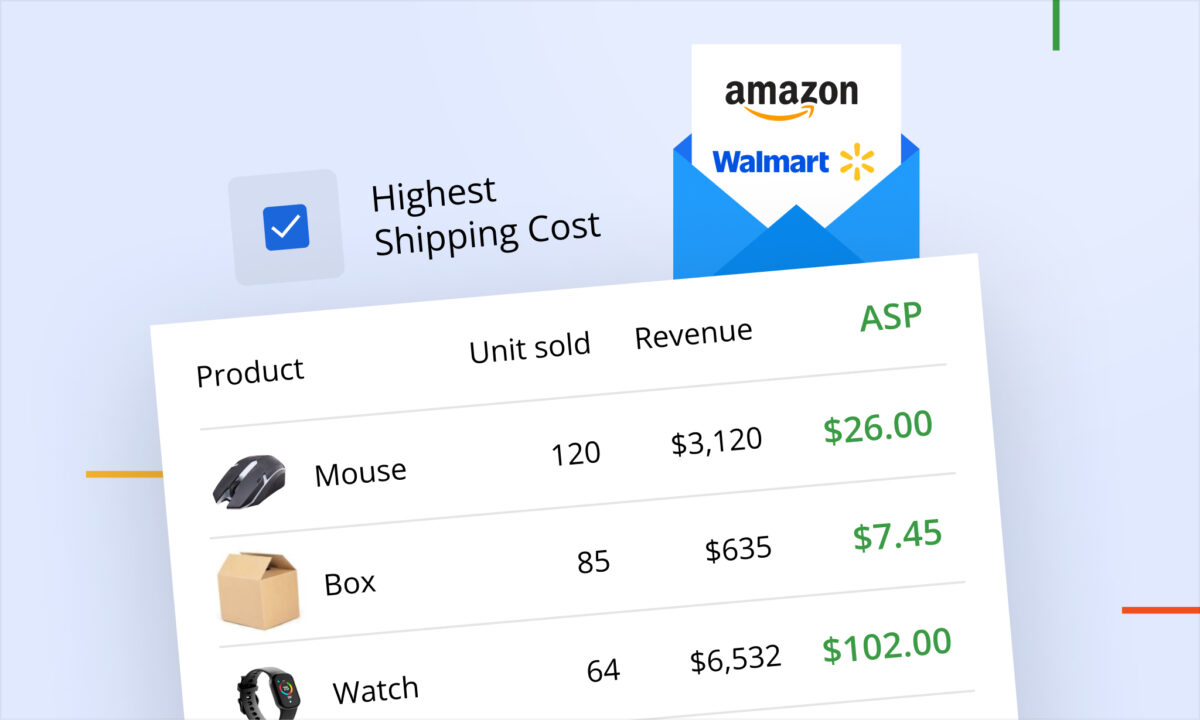
If you run Google Ads, post on Instagram or TikTok, publish YouTube videos, send email campaigns, or get traffic from blogs and affiliates, you’ve probably had the same question: how much of that actually turns into Amazon orders?
Amazon Attribution answers it — and the new Amazon Attribution page brings that answer into sellerboard, next to the profit and PPC numbers you already look at every day.
What you can see
For every attribution link you’ve created, the page reports:
- Clicks — traffic that reached Amazon from your external channel
- Detail page views — how many of those clicks landed on a product page
- Add-to-carts — how many visitors moved toward buying
- Orders and sales — the conversions and revenue the campaign produced
- Brand halo revenue — sales of your other products from traffic that arrived through this campaign
- New-to-brand share — how much of that revenue came from first-time buyers of your brand
Everything is broken down by campaign, ad group, and tag, so you can compare a TikTok creator against a Google Ads campaign against an email blast on the same screen.
Filtering and roll-ups
Filter by product, period, publisher, campaign, or tag. The chart and the summary panel recalculate for whatever range and filter set you pick, so you can go from “how did all external traffic perform last month” down to “how did this one influencer’s link perform in the two weeks after the post” without leaving the page.
Why brand halo and new-to-brand matter
These two metrics are the reason off-Amazon marketing often looks better than a naive ROI calculation suggests.
Say an influencer link drives 40 orders of the product it pointed at. That’s the obvious number. But brand halo revenue may show another 15 orders of your other ASINs from the same traffic — people who clicked through for one item, browsed your catalogue, and bought something else. If new-to-brand share on that campaign is high, you’re also buying first purchases from customers who had never bought from you before, which changes how you value the spend against a repeat-purchase category.
Judge external campaigns on total attributed revenue plus new customer acquisition, not just on the single ASIN you linked to.
Getting access
The Amazon Attribution page appears automatically if you’re enrolled in Amazon Brand Registry. No extra setup, no connection step — Brand Registry is the only requirement, because Amazon Attribution itself is a Brand Registry feature.
One thing to keep in mind when you read the numbers: all metrics use Amazon’s default 14-day attribution window. A click today can be credited with an order up to 14 days later, so very recent periods will keep filling in for a while. Don’t write off a campaign you launched three days ago.
Automatic COGS import: keep your product costs in sync
Accurate profit depends on accurate cost of goods. And COGS is the number most likely to drift out of date, because it lives somewhere else — usually a Google Sheet your operations team maintains, or a CSV feed exported from your ERP or 3PL.
Updating it by hand is the kind of task that gets skipped for three weeks, and then every profit figure in that window is quietly wrong.
sellerboard can now pull your COGS in for you, every day. You point it at your file once, and your costs stay in step with your own source of truth without anyone remembering to do anything.
How to set it up
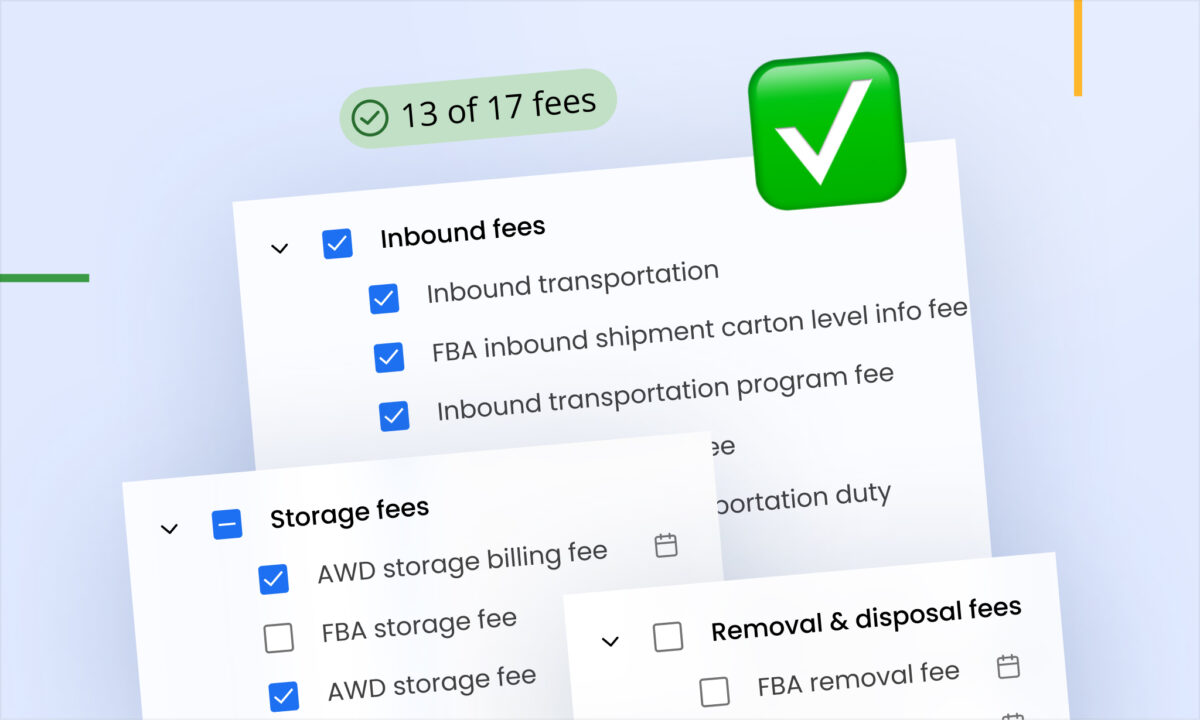
- Go to Settings → Automation and choose COGS import.
- Paste a Google Sheets link or a direct CSV/Excel URL.
- Set a daily sync time.
- Map your columns to sellerboard’s fields: ASIN, SKU, batch quantity, period start date, cost.
- Pick your accounting method — Weighted, By period, or FIFO.
- Save.
From then on, sellerboard reads the file each day and applies any changes it finds. If nothing changed, nothing happens — the sync is quiet by design and won’t churn your historical numbers without reason.
Choosing an accounting method
The method you pick determines how a cost change is applied to units you’ve already got in stock:
- Weighted — blends old and new batch costs into a single average cost per unit. Good default if you buy the same product repeatedly at shifting prices and want smooth, stable margins.
- By period — applies a cost from the date you set it forward. Good when your costs change on a clear schedule and you want each period’s profit to reflect what you were paying at the time.
- FIFO — consumes your oldest batch first at its own cost, then moves to the next. Most accurate if your landed costs have moved sharply and you want each sale matched to the actual batch it came from.
If your supplier prices have jumped recently, FIFO or By period will show the shift in your reports more faithfully than Weighted, which averages it away.
Column mapping tips
Two fields do most of the work here:
- Batch quantity tells sellerboard how many units the cost applies to, which is what makes FIFO and Weighted calculations possible.
- Period start date tells it when the cost took effect.
Keep the sheet in one row per ASIN/SKU per batch, with a consistent date format, and the mapping is a one-time job.
Real ACOS on the Trends page
Real ACOS measures your ad spend against total sales of the advertised product, not just the sales Amazon attributes to the ad. It’s the honest version of the metric, because your PPC is usually lifting organic sales too, and standard ACOS gives you no credit for that.
The catch until now: seeing whether Real ACOS was improving meant checking one period, then another, then comparing by hand.
Real ACOS now sits on the Trends page alongside your other metrics. You can see the direction of travel in one place — whether last month’s optimisation actually made your advertising more efficient, or whether efficiency has been slipping for a quarter while total sales grew and hid it.
A detail worth knowing: when the current period’s Real ACOS comes in lower than the previous one, the value turns green. That’s the opposite of most metrics on the page, and it’s deliberate — with ACOS, lower is better. Green means the trend is good.
A worked example: if you spent €2,000 on ads for a product that did €20,000 in total sales last month, Real ACOS is 10%. Bring spend down to €1,800 while total sales hold at €20,000 and Real ACOS drops to 9% — green, and roughly €200 straight to profit. But if spend stays at €2,000 while total sales fall to €16,000, Real ACOS rises to 12.5% and the metric flags it even though nothing about your campaigns changed.
All three updates are live now
No action needed to get them — Amazon Attribution appears on its own for Brand Registry sellers, Real ACOS is already on your Trends page, and COGS import is waiting in Settings → Automation whenever you’re ready to point it at a file.
If you try them, we’d like to know how they work for you. Tell us what’s useful and what’s missing — feedback from sellers is what drives what we build next.